



incl. VAT plus shipping
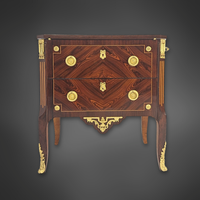
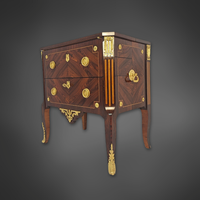
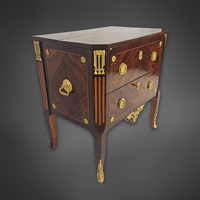
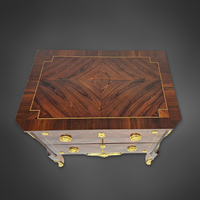
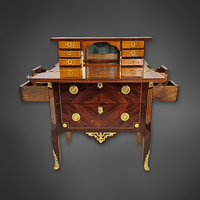
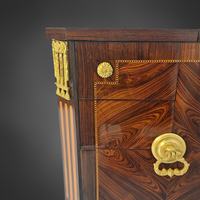
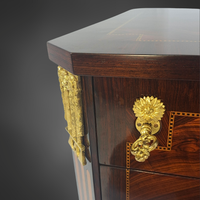
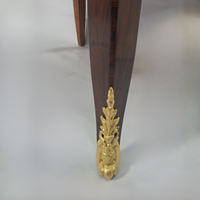
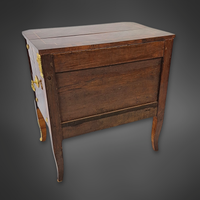
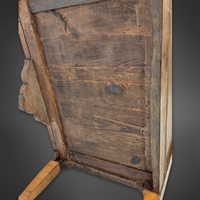
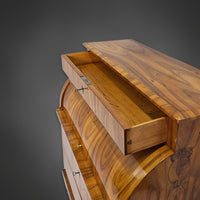
Exceptional and finely crafted transformation furniture from the second half of the 19th century, known as a Bureau à transformation « à la Bourgogne ». The piece is designed in the transitional style between Louis XV and Louis XVI and is distinguished by its elaborate mechanism, selected fine veneers, and gilded bronze fittings.
At first glance, the piece appears as an elegant, two-drawer chest of drawers. Behind this, however, lies an ingenious system of drawers, movable panels, and a recessed writing top.
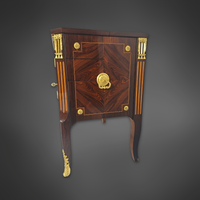
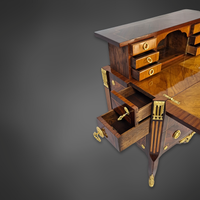
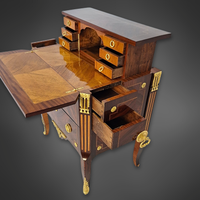
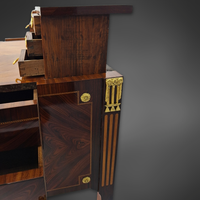
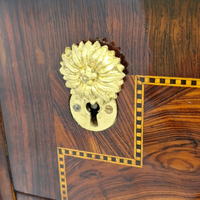
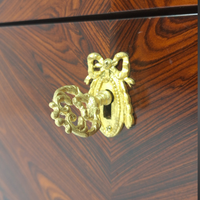
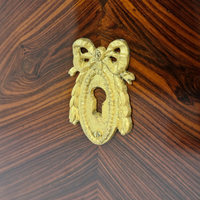
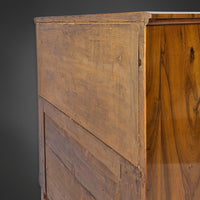
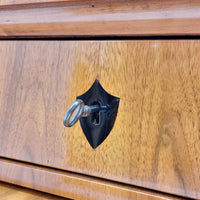
Particularly ingenious are the key slots hidden on the sides under the small bronze fittings. Through these, two drawers can be opened on each side, offering additional storage space.
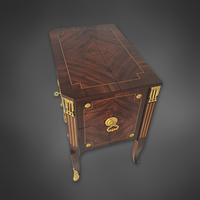
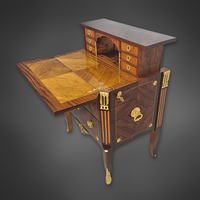
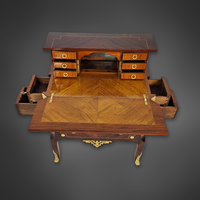
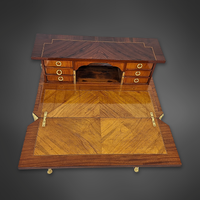
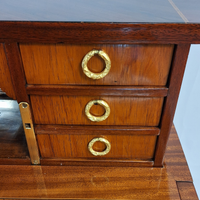
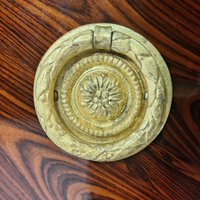
The actual transformation takes place via the two upper handle rings on the front. By gently pulling them out, a mechanism is triggered that raises the rear part of the top using a spring system. A small writing top appears with three drawers on each side and an open central compartment with a mirror.
The front part of the top can then be folded forward and serves as a writing surface. Inside, a particularly beautiful veneer work with carefully matched wood grains is revealed.
The numerous functions, the high-quality workmanship, and the finely crafted details make this transformation furniture a special example of historical furniture craftsmanship. Even closed, it impresses with its elegant shape, the lively veneer pattern, and the decorative gilded bronze fittings.
Condition
The piece is in a restored, ready-to-use condition. The shellac polish has been renewed and particularly highlights the beautiful fine veneers.
All mechanical functions have been checked and are fully functional. Both the pull-out writing top with its spring system and the fold-out writing surface and all drawers work flawlessly.
Details
Dating: 2nd half of the 19th century
Style: Transitional Louis XV / Louis XVI (Transition)
Material: Fine veneers, gilded bronze fittings
Design: Transformation chest of drawers with integrated writing top
Condition: Restored and ready-to-use
Surface: Renewed shellac polish
Mechanism: Fully functional, all functions flawless
Special features: Mechanically pull-out writing top with spring system, eight small drawers in the top, four side drawers with hidden key slots, and fold-out writing surface.
Dimensions closed
Width: 72 cm
Depth: 57 cm
Height: 75.5 cm
We introduce:


Eagle Sofa by Wilhelm Kimbel, Mainz, circa 1835 – Biedermeier/Empire Sofa in Walnut


Small Biedermeier side cabinet, cherry wood, Southern Germany circa 1815/20


Biedermeier revolving-top occasional table, walnut, c. 1825


Biedermeier pillar chest of drawers with pointed gable, maple veneer, Thuringia around 1825/30


Biedermeier secretary with pointed gable, cherry-veneered, Thuringia circa 1820/25


Viennese Biedermeier seating group: sofa and two armchairs, mahogany, circa 1810


incl. VAT zzgl. Versand
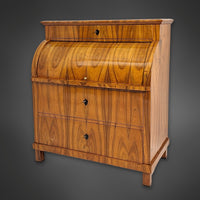
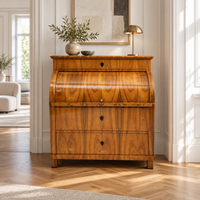
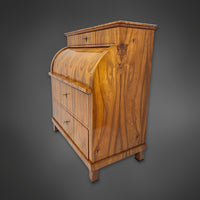
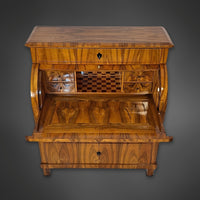
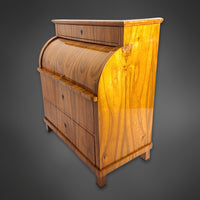
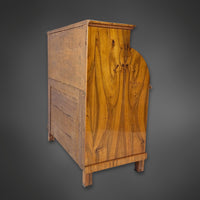
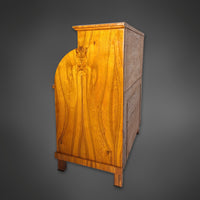
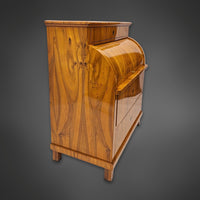
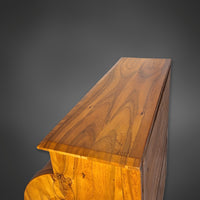
Beautiful and expertly crafted Biedermeier cylinder secretary from Southern Germany, created around 1825–1830. The piece of furniture is veneered in walnut on softwood and is particularly distinguished by its carefully selected and elaborately worked wood grain.
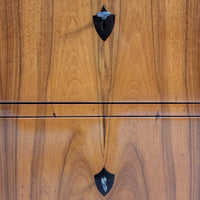
Particularly noteworthy is the six-fold mirrored veneer pattern on the front, which was worked from a continuous veneer pattern from bottom to top. The evenly arranged grains give the secretary a beautiful, calm appearance and emphasize the high craftsmanship.
The secretary has three large drawers that offer generous storage space. The top drawer is located above the semicircular cylinder lock, with two more below.
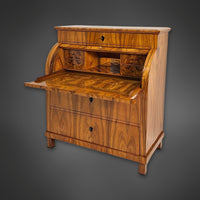
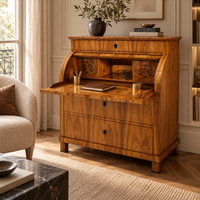
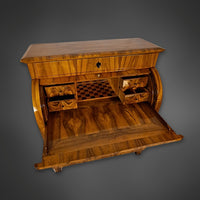
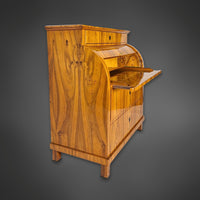
An extendable writing surface activates the mechanism of the semicircular cylinder lid. When pulled out, it opens and reveals the finely crafted interior.
Inside are four small drawers, which are also veneered in particularly beautifully grained walnut. In the center is an open compartment with a small mirror and a decorative chessboard. The writing surface is made of solid wood and offers a generous area for writing or working.
The cylinder secretary combines the clear design language of the Biedermeier with thoughtful functionality. Thanks to its warm wood color and simple design, it can be integrated into both classic and modern living spaces.
A comparable type of furniture is shown on page 219 of the specialist book "Biedermeier Furniture – Germany and the Danube Monarchy" by Rainer Haaff.
Condition
The secretary has been professionally restored and is in a ready-to-use condition.
The wooden surfaces have been repolished with shellac, which makes the beautiful walnut grain stand out particularly well.
All functions have been checked and are in perfect working order. The cylinder mechanism, the extendable writing surface, and the drawers function without any problems.
Details
Period: Biedermeier, around 1825–1830
Origin: Southern Germany
Material: Walnut veneer on softwood, solid wood writing surface
Design: Cylinder secretary with semicircular roll lock
Veneer pattern: Six-fold mirrored, continuous walnut veneer on the front
Features: Three large drawers, four small interior drawers, central compartment with mirror and chessboard
Surface: Newly polished with shellac
Condition: Restored and ready to use
Mechanics: Fully functional
Literature reference: Rainer Haaff, "Biedermeier Furniture – Germany and the Danube Monarchy", page 219, comparable type of furniture
Dimensions
Width: 113 cm
Depth closed: 64 cm
Depth open: 95 cm
Height: 127.5 cm
ANTIQUE BLOG HOCHHEIM - Our blog


A high price for furniture "in the style" of Louis should be justified. While not an original piece, it has been crafted with the same care and quality as antique furniture.
Read more

Antique furniture has been around for centuries and is still used in homes around the world. The best thing about antique furniture is that they
Read more

One of the biggest challenges when buying antique furniture is imagining how it will look in your home. Many pieces are very ornate
Read more